Chemical formulas look like code to many students. What does the 2 in H₂O mean? Why is 2H₂O different from H₂O₂? PhET’s free Build a Molecule simulation answers those questions by letting students build molecules atom by atom, then collect them to match a formula.
This guide gives you a lesson of 45–50 minutes for grades 8–11, the misconceptions to watch for, and a free printable worksheet with a teacher answer key.
Free worksheet: 10 questions in five parts, molecule tables and a full answer key. US Letter.
In this guide7 sections
Lab at a glance
| Grade level | 8–11 (physical science, introductory chemistry) |
| Time | 45–50 minutes |
| Simulation | Build a Molecule: Single, Multiple and Playground screens |
| Big ideas | Reading formulas, subscripts vs coefficients, bonding patterns, conservation of atoms |
| Students will | Build molecules from formulas, count atoms, explain coefficients, predict simple formulas from bonding patterns |
| Where to open it | Our science simulations page or the PhET website |
Know the simulation in 3 minutes
- Single screen: students build one of each molecule in a collection. The first collection asks for H₂O, O₂, H₂, CO₂ and N₂. Completed molecules show their name, and a 3D button lets students rotate them.
- Multiple screen: the goals include coefficients such as 2CO₂, 2O₂, 4H₂ and 2NH₃, so students must build several copies of each molecule.
- Playground: a free-build area with larger kits of hydrogen, carbon, nitrogen, oxygen and other atoms.
Atoms come from buckets in a kit at the bottom of the screen; the arrows on the kit show more atom types. Molecules can be pulled apart again if students make a mistake.
Step-by-step lesson plan
Part A: Read a formula (10 minutes)
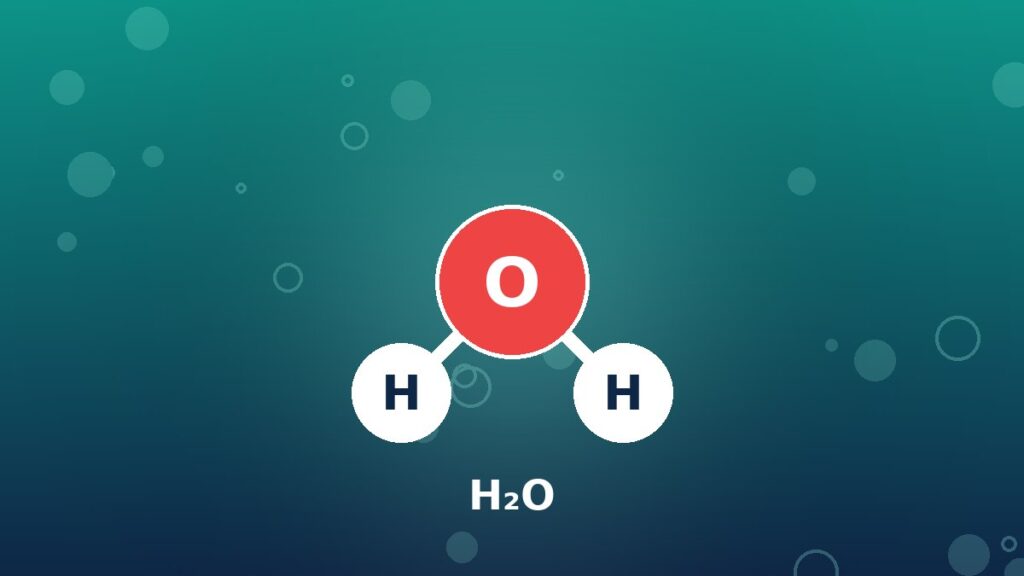
On the Single screen, students build the five molecules in Collection 1 and record the number of each type of atom. The idea students should leave with: a subscript tells you how many atoms of that element are in one molecule, and no subscript means one. The 3D view is a bonus: students see that water is bent and carbon dioxide is straight.
Part B: Subscripts vs coefficients (10 minutes)
The Multiple screen is where this lab earns its place. To fill a box marked 2NH₃, students must build two separate ammonia molecules: 2 nitrogen atoms and 6 hydrogen atoms in total. Then ask the key question: is 2H₂O the same as H₂O₂? Building both settles it. One is two water molecules; the other is a single molecule of hydrogen peroxide, a completely different substance.
Part C: Bonding patterns (10 minutes)
Students count the bonds each atom forms in the molecules they built. They find a pattern: hydrogen forms 1 bond, oxygen 2, nitrogen 3 and carbon 4. Then they use the pattern to predict CH₄ and NH₃ before building them in the Playground. Predicting before building turns the simulation into an experiment, not a coloring exercise.
Part D: Playground challenges (10 minutes)
Students build methane, ammonia, hydrogen peroxide, ozone and ethylene. Ozone (O₃) versus oxygen (O₂) makes a good discussion: the same element, but a different number of atoms gives a different substance.
Part E: Count atoms in a reaction (5 minutes)
To finish, students count atoms on both sides of 2H₂ + O₂ → 2H₂O: 4 hydrogen and 2 oxygen on each side. This is the foundation for balancing equations, and it shows why you balance by changing coefficients, never subscripts.
Molecules students can build
| Molecule | Formula | Atoms | Fun fact for discussion |
|---|---|---|---|
| Water | H₂O | 3 | Its bent shape makes it polar, which is why it dissolves so many things |
| Carbon dioxide | CO₂ | 3 | A straight molecule; a greenhouse gas |
| Ammonia | NH₃ | 4 | The starting point for most nitrogen fertilizers |
| Methane | CH₄ | 5 | The main component of natural gas |
| Hydrogen peroxide | H₂O₂ | 4 | Same elements as water, very different properties |
| Ozone | O₃ | 3 | Protects Earth from ultraviolet light in the upper atmosphere |
| Ethylene | C₂H₄ | 6 | A plant hormone that ripens fruit |
Common misconceptions to watch for
- “2H₂O means 4 hydrogen atoms in one molecule.” The coefficient counts molecules; there are two molecules, each with 2 hydrogen atoms.
- “You can balance an equation by changing subscripts.” Changing H₂O to H₂O₂ changes the substance. Only coefficients can change.
- “O₂ and O are the same thing.” Oxygen in the air exists as O₂ molecules; a single O atom is very reactive.
- “Molecules are flat, like the formula on paper.” The 3D view shows real shapes, which affect how substances behave.
Extension ideas
- Isomers: in the Playground, challenge students to build two different molecules with the same formula (with enough carbon atoms, structures like C₂H₆O can be arranged in more than one way). Discuss why the arrangement matters.
- Balancing practice: give students unbalanced equations and let them build the reactant and product molecules to find the coefficients.
- Link to states of matter: our States of Matter lab shows how these molecules behave as solids, liquids and gases.
- Quiz review: finish with a round of our Periodic Table quiz to practice the element symbols used in this lab.
Frequently asked questions
What does the Build a Molecule simulation teach?
It teaches how to read chemical formulas, the difference between subscripts and coefficients, how atoms bond in common patterns, and how molecules look in 3D.
What grade level is Build a Molecule for?
It suits grades 8–11. Younger students can use the Single screen to learn formulas; older students benefit most from the Multiple screen and the bonding-pattern questions.
How does this lab connect to balancing equations?
Students who understand that coefficients count molecules and subscripts are fixed parts of each molecule find balancing much easier. Part E of the worksheet makes that link directly. For other units, see our circuit lab and Gravity and Orbits lab in the same format.