Most students know how to read a textbook the same way they read a novel: start on the first page, keep going, and hope something sticks. Then the quiz comes, and the chapter feels brand new. The problem is not effort. Textbooks are dense, packed with vocabulary, diagrams and sidebars, and reading them straight through is one of the least efficient ways to learn from them.
This guide shows a better way to read a textbook chapter in about the same amount of time. It is built on the classic SQ3R method (Survey, Question, Read, Recite, Review), adapted for high school courses, and it pairs well with active recall and spaced repetition. Teachers can use it as a mini-lesson; students can use it tonight.
In this guide8 sections
Why reading a textbook is different
A novel is written to be followed. A textbook is written to be studied. Each section usually has one main idea, a few supporting details, key terms in bold, and a figure or example that makes the idea concrete. If you read without a purpose, your eyes move across all of it equally, and nothing gets flagged as important. The steps below give your reading a purpose before you start, and force your brain to retrieve the material after you finish, which is what actually builds memory.
The 7-step method
1. Survey the chapter (3–5 minutes)
Before reading a single paragraph, flip through the whole chapter. Read the title, the learning objectives, every heading and subheading, the bold terms, the figure captions and the end-of-chapter summary or review questions. This builds a mental map, so when you read the details you already know where they belong.
2. Turn headings into questions
Take each heading and rewrite it as a question in your notebook. “The Causes of World War I” becomes “What were the main causes of World War I?” “Newton’s Second Law” becomes “What does Newton’s second law say, and how do I use F = ma?” Now you are reading to answer something, not just to finish.
3. Read one section at a time
Read only until the next heading. Slow down for definitions, diagrams and worked examples; these are where most test questions come from. If a sentence makes no sense, read the figure that goes with it before rereading the sentence.
4. Close the book and recall
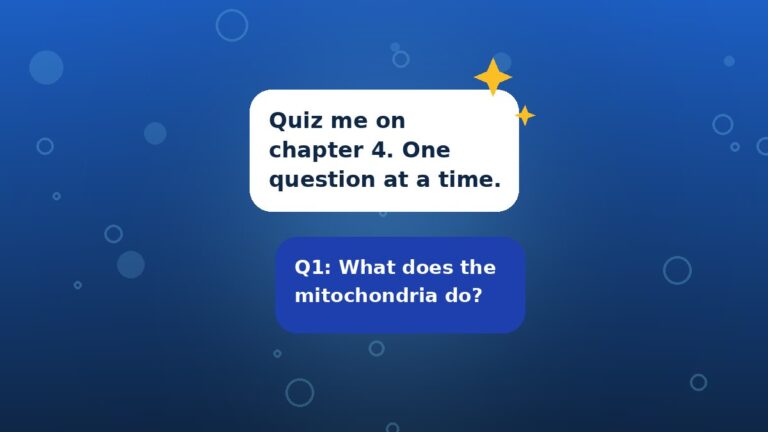
This is the step most students skip, and it matters most. After each section, cover the page and answer your question from memory in one or two sentences. If you cannot, look back, then try again. Recalling is harder than rereading, and that difficulty is exactly what makes it stick.
5. Take short notes, not copied notes
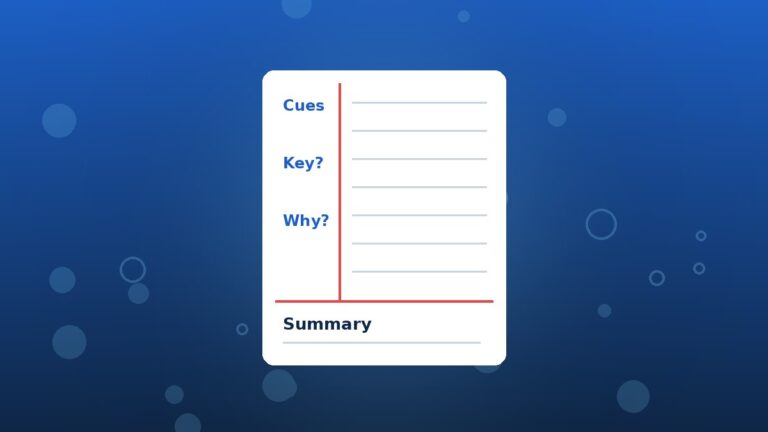
Write your recall answers in your own words. Add key terms with a short definition and one example. Skip copying long passages. If you like structure, use a two-column format: questions on the left, answers on the right, so the page becomes a self-quiz later. Our guide on how to take notes in class explains formats that work for textbooks too.
6. Do the review questions
The questions at the end of a section or chapter show what the authors think matters. Answer at least a few without looking. Mark any you miss and reread only those parts.
7. Review in short sessions
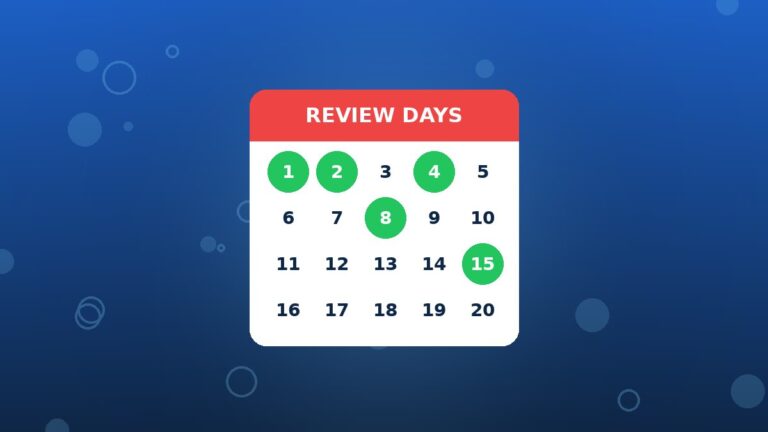
Review your question-and-answer notes the next day, a few days later and the week before the test. Five minutes of self-quizzing beats an hour of rereading the night before.
How long should it take?
A rough time budget helps students plan, especially with a heavy homework load. The table below is a starting point for a typical 15–20 page high school chapter.
| Step | Time | What you produce |
|---|---|---|
| Survey | 3–5 min | Mental map of the chapter |
| Write questions | 3–5 min | One question per heading |
| Read + recall (per section) | 8–12 min | Short answer in your own words |
| Review questions | 10 min | List of weak spots |
| Next-day review | 5 min | Quick self-quiz |
If a full chapter feels like too much for one night, split it across two or three evenings using a simple plan like the ones in our time management tips for students.
Adjusting the method by subject
Science
Spend more time on diagrams and processes. After reading about the water cycle or cellular respiration, try to redraw the diagram from memory and label it. Formulas should go in your notes with units and one worked example.
History and social studies
Focus on cause and effect, and on who, when and why. A quick timeline at the end of each chapter helps you connect events. Primary source excerpts in the chapter are often test favorites, so note what each source shows.
Math
Math textbooks are read with a pencil. Cover each worked example, try it yourself, then check. The explanation matters less than whether you can do the steps. Our guide on how to study for a math test covers the practice side.
English and literature anthologies
For informational sections, use the full method. For stories and poems, read once for enjoyment, then reread with the questions your teacher assigned.
Common mistakes to avoid
- Highlighting everything. If half the page is yellow, nothing stands out. Highlight only after you finish a section, and only the answer to your question.
- Reading with a phone nearby. Every notification resets your focus. Put it in another room; see our tips on staying focused while studying.
- Skipping figures and captions. They often explain the idea faster than the paragraph.
- Rereading instead of recalling. Rereading feels productive because the text looks familiar, but familiarity is not memory.
Tips for teachers
Model the method once with a real chapter from your course. Project the chapter, think aloud as you survey it, and turn headings into questions together. For the first few assignments, ask students to submit their question-and-answer notes instead of a worksheet. You can also use a short recall prompt as a bell ringer the next day: “Without your book, answer two of last night’s questions.”
Frequently asked questions
What is the SQ3R reading method?
SQ3R stands for Survey, Question, Read, Recite and Review. It was introduced by educational psychologist Francis P. Robinson in the 1940s and is still one of the most widely taught textbook reading strategies. The 7-step method above is an expanded version of it.
Should I read the chapter before or after the lesson?
Both can work. A quick survey before class makes the lesson easier to follow; the full read-and-recall after class locks it in. If you only have time for one, follow your teacher’s assignment and do the recall step either way.
Is it okay to listen to an audio version?
Audio can help with long reading loads or reading difficulties. Pair it with the same steps: preview the headings, pause after each section and say or write the main idea from memory.
How do I remember vocabulary from the chapter?
Turn bold terms into flashcards with the term on one side and a definition plus an example on the other. Quiz yourself across several days rather than all at once.
Final thoughts
Learning how to read a textbook well is one of the highest-value study skills a high school student can build, because it pays off in every course. Survey first, read with questions, recall after every section and review in short bursts. It feels slower for the first chapter or two, then it becomes the fastest way to walk into a test already knowing the material.