Retrieval practice activities are short classroom tasks that ask students to pull information out of memory instead of putting it back in by rereading. A quick quiz, a brain dump or a “what do you remember from yesterday?” prompt all count. Cognitive scientists call the benefit the testing effect: the act of recalling something makes it easier to recall again later, much more than looking at it one more time.
The good news for busy teachers is that retrieval practice does not need new materials or much class time. Most of the activities below take five to ten minutes, work in any subject from grade 6 to grade 12 and can be graded lightly or not at all. You will find 15 ready-to-use ideas, sample prompts, a weekly plan, a comparison table and answers to the most common questions.
In this guide8 sections
What makes retrieval practice work
Retrieval practice works best when a few conditions are in place. Keep these in mind as you choose activities:
- Effort matters. Recall should feel a little hard. If students can copy the answer from their notes, they are reviewing, not retrieving. Ask them to close notebooks first.
- Low stakes. The goal is learning, not grading. Most retrieval tasks should count for little or nothing so students are not afraid to get things wrong.
- Feedback follows. After students recall, show the correct answers so they can fix mistakes before the error sticks.
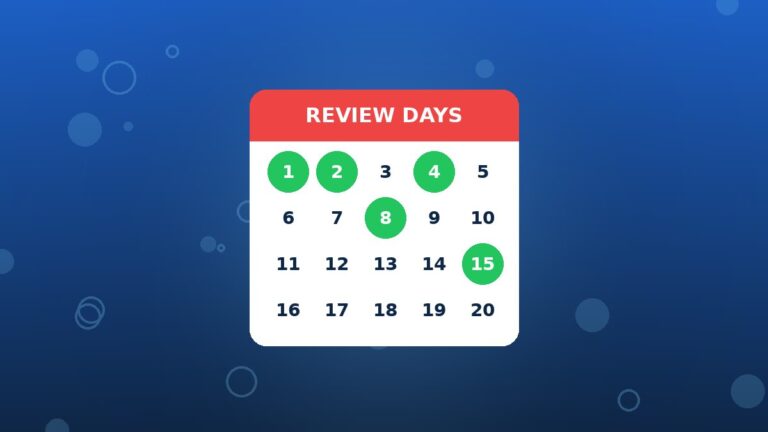
- Spacing. Retrieving last week’s or last month’s content is more powerful than retrieving what you taught ten minutes ago. Combine retrieval with a spaced repetition schedule.
- Mixing. Mix questions from different units so students must decide which idea applies, not just repeat the last lesson.
15 retrieval practice activities for middle and high school
Quick starters (3–5 minutes)
- Brain dump. Students write everything they remember about a topic for three minutes, notebooks closed. Then they open notes and add what they missed in a different color. The second color shows them exactly what to study.
- Last lesson, last week, last unit. Put three questions on the board: one from yesterday, one from last week and one from an earlier unit. This is an easy way to build spacing into every bell ringer.
- Two things. “Write two things you learned yesterday and one question you still have.” Short, simple and useful for planning the next lesson.
- Fill the blank diagram. Show an unlabeled diagram (a cell, a circuit, a map, a timeline) and ask students to label it from memory.
- Retrieval grid. A 4×3 grid of questions where each row comes from a different time period. Students choose any six and answer them. Older content can be worth more points to reward harder recall.
Partner and group activities (5–10 minutes)
- Explain it to a partner. Partner A explains a concept for 60 seconds without notes while Partner B listens and checks against the textbook. Then they switch topics. This pairs well with think-pair-share.
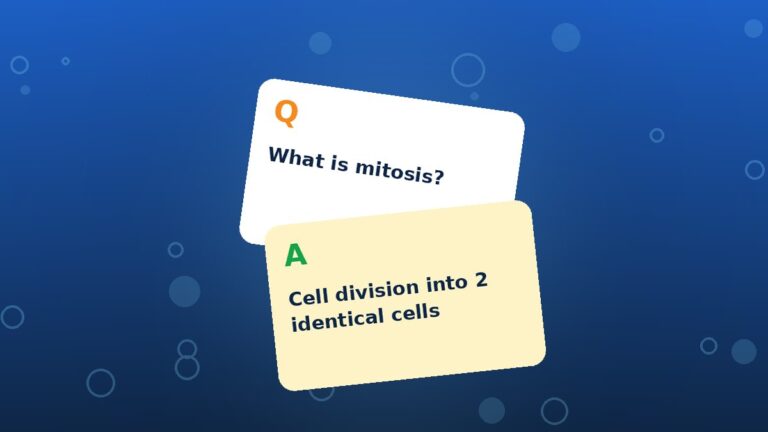
- Quiz-quiz-trade. Each student gets a card with a question on the front and the answer on the back. They pair up, quiz each other, trade cards and find a new partner.
- Concept map from memory. Groups get a central term and build a concept map with as many linked ideas as they can recall. Then they compare maps with another group.
- Odd one out. Show four terms (for example: mitosis, meiosis, photosynthesis, cytokinesis) and ask students to choose the odd one out and justify it. There can be more than one good answer; the justification is the retrieval.
- Retrieval relay. Each group gets a sheet with eight questions. One student answers a question and passes the sheet on. The group may not use notes, but they can help each other remember.
Low-stakes quizzes and games
- Ungraded mini quiz. Five questions, students self-check, no scores recorded. Tell them clearly that the quiz is for practice.
- Mini whiteboards. Ask a question, students write the answer, and everyone holds up the board on “3, 2, 1, show.” You see every answer in seconds, which makes it one of the most efficient formative assessment examples.
- Review games. Game formats such as quiz tournaments or team challenges work as retrieval practice as long as students answer from memory. See our review games for high school for formats that keep everyone answering, not just the fastest student.
- Flashcards with a twist. Students make cards, but must say the answer out loud before flipping. Cards they get right twice in a row go into a “check next week” pile.
- Exit ticket recall. End class with one question about today and one about an older topic. Our exit ticket ideas include prompts you can adapt.
Comparison table: choosing the right activity
| Activity | Time | Best for | Grading |
|---|---|---|---|
| Brain dump | 3–5 min | Seeing gaps at the start of a unit review | None or completion |
| Last lesson, last week, last unit | 5 min | Daily spacing | None |
| Retrieval grid | 8–10 min | Mixed review before a test | Self-scored |
| Explain it to a partner | 5 min | Concepts and processes | None |
| Concept map from memory | 10 min | Connecting ideas across a unit | Quick check |
| Mini whiteboards | 5 min | Checking the whole class at once | None |
| Ungraded mini quiz | 5–7 min | Vocabulary, facts, formulas | Self-checked |
Sample prompts you can copy
Use or adapt these sentence starters in any subject:
- “Without looking, write the three most important ideas from yesterday’s lesson.”
- “Explain how ___ is different from ___. Give one example of each.”
- “Draw and label ___ from memory.”
- “What would happen if ___? Use what we learned last week.”
- “List as many key terms from Unit 2 as you can in two minutes. Put a star next to the ones you could explain to a friend.”
- “Solve this problem, then write the rule you used in your own words.”
A simple weekly plan
You do not need to use every activity. A predictable rhythm is easier for students and for you:
- Monday: brain dump on last week’s topic.
- Tuesday: last lesson, last week, last unit warm-up.
- Wednesday: explain it to a partner.
- Thursday: mini whiteboards during the lesson.
- Friday: ungraded mini quiz or a short review game with mixed questions.
This adds roughly 25–30 minutes of retrieval each week, and most of it replaces time you would already spend on warm-ups and reviews.
Teaching students to use retrieval at home
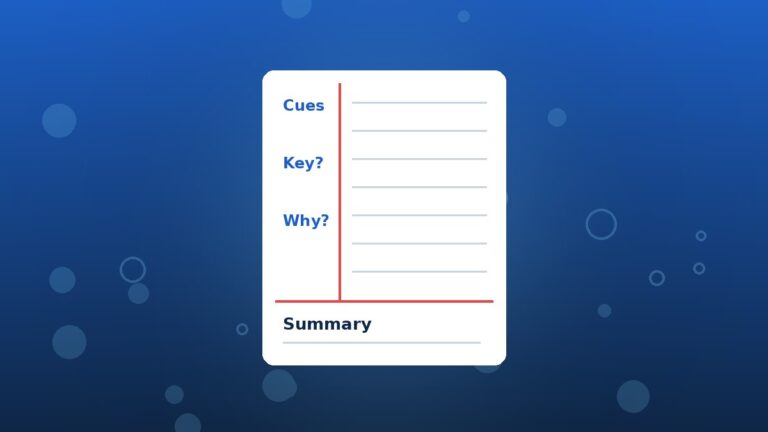
Many students believe rereading and highlighting are the best ways to study because the material feels familiar. Show them the difference. After a brain dump, ask: “Which felt harder, reading your notes or writing from memory? Which showed you what you don’t know?” Then teach them to use the same strategies at home: closed-book summaries, self-made quizzes and flashcards. Our guide to the active recall study method is written for students and makes a good homework reading.
Common mistakes to avoid
- Letting students keep notes open. That turns retrieval into copying.
- Only asking about today’s lesson. Recall right after teaching is easy and fades fast; include older material.
- Grading every attempt. High stakes create anxiety and cheating, which defeats the purpose.
- Skipping feedback. Always show or discuss the correct answers.
- Using only recognition questions. Multiple choice is useful, but short written answers require stronger recall.
Frequently asked questions
What is the difference between retrieval practice and active recall?
They describe the same idea. “Retrieval practice” is the term most often used in research and teaching, while “active recall” is common in student study advice. Both mean bringing information back from memory instead of rereading it.
How often should I use retrieval practice?
A few minutes in most lessons is enough. Short, frequent retrieval spread across days and weeks works better than one long review session before a test.
Should retrieval practice be graded?
Mostly no. Keep it low stakes or ungraded so students focus on remembering rather than on points. You can record completion if you need accountability.
Does retrieval practice work for struggling students?
Yes, but give support. Start with easier prompts, offer word banks or the first letter of key terms, and make sure feedback is quick so students do not practice wrong answers.
Start small: pick one activity from this list and use it at the start of class three times this week. Once the routine feels natural, add spacing by mixing in questions from older units. For more research summaries and free guides, visit RetrievalPractice.org.