Ask a room of teenagers how they feel about icebreakers and you will get groans. Their complaints are fair: many icebreakers force people to share personal things in front of strangers, take too long, and have no obvious point.
Good icebreakers are different. They are short, low-risk and useful: they help students learn names, find common ground and practice talking to each other before the real work starts. The 15 below work for the first week of a semester, for new project groups, and for classes that never quite came together.
In this guide7 sections
Why teens hate icebreakers (and what to do instead)
| What students hate | Do this instead |
|---|---|
| Sharing personal facts in front of everyone | Let students choose from a menu of questions, with a “pass” option |
| Long rounds where each person speaks to the whole class | Small groups or pairs, then a quick whole-class share |
| Silly physical games | Light movement with a clear purpose, like corners or line-ups |
| Activities with no point | Tie the game to names, teamwork or the subject |
| Being put on the spot | Give thinking time and let volunteers go first |
Three rules make almost any icebreaker better: keep it under ten minutes, always allow a pass, and take part yourself. Students relax when the teacher answers the same questions.
Low-pressure icebreakers (1–5)
1. This or That
5 minutes · whole class
Read two options (“mountains or beach,” “early bird or night owl,” “books or movies”). Students move to one side of the room. Ask one or two people per side for a quick reason. Nobody has to speak, and students learn a lot about each other at a glance.
2. Question menu
10 minutes · pairs
Project ten questions, from easy (“Best snack for studying?”) to slightly deeper (“What is a skill you would like to learn this year?”). Pairs choose any three to ask each other. Choice removes most of the discomfort.
3. Common Ground
10 minutes · groups of 4
Each group must find five things all members have in common, but nothing obvious like “we go to this school” or “we are wearing shoes.” Groups share their most surprising one. It works especially well for new project teams.
4. Six-Word Memoir
10 minutes · individual, optional sharing
Students describe themselves (or their summer, or their relationship with math) in exactly six words. Examples: “Hates mornings, loves chemistry, needs coffee.” Post them on a wall without names and let the class guess. The constraint makes it a writing exercise, not an overshare.
5. Desert Island Picks
10 minutes · groups
Each student picks three items, three songs or three books they would take to a desert island, then explains one choice to their group. Groups look for overlaps.
Movement icebreakers (6–9)
6. Silent line-up
5 minutes · whole class
Students line up by birthday (month and day) without talking, using only gestures. When they finish, they say their birthdays down the line to check. It is absorbing, slightly chaotic and a natural way to hear everyone’s name.
7. Four corners opinions
10 minutes · whole class
Label the corners “strongly agree,” “agree,” “disagree” and “strongly disagree.” Read low-stakes statements (“Pineapple belongs on pizza,” “Homework should be optional on Fridays”). Students move, then talk to someone in their corner about why.
8. Rock-paper-scissors-lizard-Spock tournament
5–10 minutes · whole class
The extended version adds two moves: lizard and Spock. It was invented by Sam Kass and Karen Bryla and made famous by a TV sitcom. Students first learn the rules with our Lizard Spock Showdown game on the projector. Then everyone plays in pairs; the loser follows the winner and cheers for them, until two finalists remain.
9. Speed meeting
10–15 minutes · two lines facing each other
Students stand in two lines facing a partner. Give a question; partners talk for 60 seconds; one line shifts one place. Five rounds and everyone has spoken to five classmates. Use the classroom timer so the switches stay sharp.
Team challenges (10–12)
10. The Marshmallow Challenge
25 minutes · teams of 4
Each team gets 20 sticks of uncooked spaghetti, one yard (about a meter) of tape, one yard of string and one marshmallow. In 18 minutes, they must build the tallest free-standing tower with the marshmallow on top. It reveals how teams plan, test and communicate, and the debrief (“What would you do differently?”) is a great start to any group project.
11. Group résumé
15 minutes · groups of 4–5
Groups write a résumé for their team as if applying for a job: combined languages spoken, places lived, skills, hobbies, number of pets. Each group presents its most impressive “qualification.” It highlights strengths, not personal details.
12. Class survey statistics
20–30 minutes · individuals, then whole class
Each student writes one survey question with a numeric or category answer (“How many hours of sleep did you get?”). Students survey ten classmates, then make a quick chart and share one finding. Students meet many people, and you get a natural lead-in to data and statistics.
Subject icebreakers (13–15)
13. Two Truths and a Lie: subject edition
10 minutes · whole class or groups
Students share two true statements and one false one, but about the subject, not themselves: “Octopuses have three hearts. Venus spins backward. Lightning never strikes the same place twice.” (The third one is the lie.) The class votes on the lie. It works as a pre-assessment, too.
14. What do you already know?
10 minutes · groups
Give each group a large sheet with the course title in the middle. In five minutes, they write everything they already know, think they know, or want to know. Groups rotate and add to each other’s sheets. You get a quick picture of prior knowledge, and students see that everyone starts somewhere.
15. Would you rather (academic edition)
5 minutes · whole class
“Would you rather travel to ancient Egypt or the year 3000?” “Would you rather have a perfect memory or be able to read 10 times faster?” Students pick a side of the room and give one reason. It doubles as a two-minute brain break later in the year.
Which icebreaker should you use?
| Situation | Best choices |
|---|---|
| First day of a new class | This or That, question menu, silent line-up |
| New project groups | Common Ground, Marshmallow Challenge, group résumé |
| Shy or quiet class | Six-Word Memoir, question menu (pairs), This or That |
| Energetic class | RPS-lizard-Spock tournament, speed meeting, four corners |
| Math or science class | Class survey statistics, Two Truths and a Lie: subject edition |
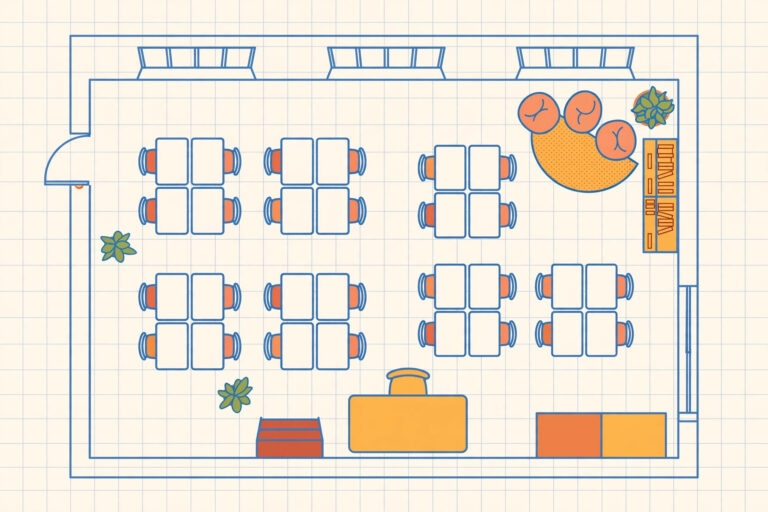
After the icebreaker, move straight into setting expectations together. Our guide to classroom norms shows how to co-create them with students, and the classroom seating arrangements guide helps you set up the room for group work.
Frequently asked questions
What is the best icebreaker for high school students?
Low-pressure games with choice work best, such as This or That, Common Ground and a question menu in pairs. They help students meet each other without being put on the spot.
How long should an icebreaker take?
Five to fifteen minutes is enough for most classes. Team challenges like the Marshmallow Challenge take longer but double as a lesson on teamwork.
Should icebreakers only happen on the first day?
No. Short icebreakers help whenever groups change: new seating, new project teams, after a long break or at the start of a new semester.