Restorative practices in the classroom focus on relationships: building them before problems happen and repairing them after harm is done. Instead of asking only “What rule was broken and what is the punishment?”, restorative approaches ask “Who was affected, and how do we make it right?” Many schools use them alongside, not instead of, other discipline systems.
This guide explains the core ideas, gives you circle prompts and restorative questions you can use tomorrow, and offers a simple plan to start.
In this guide6 sections
The core ideas
- Relationships come first. Students who feel connected are less likely to cause harm and more likely to repair it.
- Harm affects people, not just rules, so the response should involve the people affected.
- Accountability means repair: understanding the impact and taking steps to fix it.
- Everyone has a voice, including the person who caused harm.
Proactive practices (building community)
Community circles
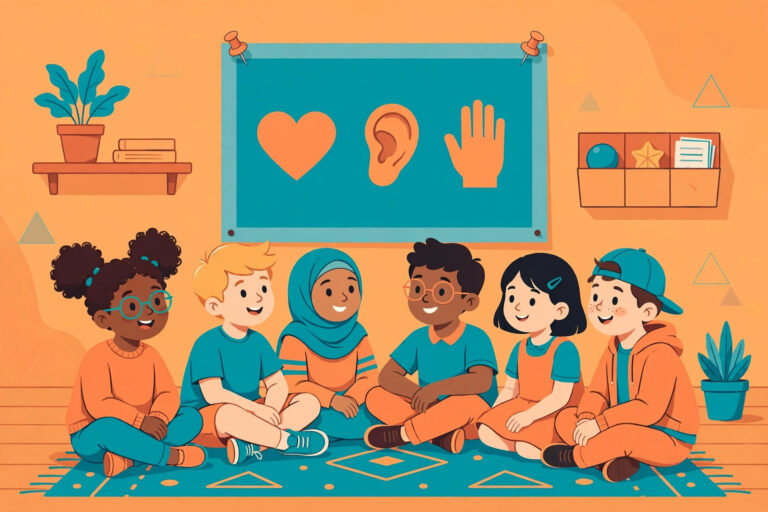
Students sit in a circle and pass a talking piece; only the person holding it speaks. Circles of 10–15 minutes once a week build trust quickly.
Low-risk prompts:
- “What is one thing that made you smile this week?”
- “If you could learn any skill instantly, what would it be?”
- “What helps you focus when you’re tired?”
Deeper prompts (later in the year):
- “What does respect look like in this classroom?”
- “Describe a time someone helped you when you were struggling.”
Other proactive practices
- Affective statements: “I feel frustrated when the class talks during instructions because I want everyone to hear.”
- Co-created norms: see our guide to classroom norms.
- Daily check-ins at the door or with a quick mood scale.
Responsive practices (after harm)
Restorative questions
For the student who caused harm:
- What happened?
- What were you thinking at the time?
- Who has been affected by what you did? In what way?
- What do you think you need to do to make things right?
For the person who was harmed:
- What did you think when you realized what happened?
- What impact has this had on you?
- What has been the hardest thing?
- What do you think needs to happen to make things right?
Repair conversations
A short, private conversation using the questions above often resolves everyday conflicts. Serious incidents should involve trained staff and follow school policy.
A simple four-week start plan
| Week | Focus |
|---|---|
| Week 1 | Explain circles, practice with low-risk prompts |
| Week 2 | Co-create class norms in a circle |
| Week 3 | Start using affective statements and restorative questions for small issues |
| Week 4 | Weekly circle becomes routine; reflect with students on how it’s going |
Common challenges
- “It takes too much time.” A 10-minute weekly circle often saves time lost to conflict later.
- “Students won’t talk.” Start with fun, low-risk prompts and allow passing.
- “It’s too soft.” Restorative work still holds students accountable; it just focuses on repair.
Frequently asked questions
What are restorative practices in schools?
Approaches that build relationships and respond to harm by focusing on its impact and how to repair it, involving the people affected.
What are the restorative questions?
They ask what happened, what the person was thinking, who was affected and what is needed to make things right.
Do restorative practices replace consequences?
Usually not. Most schools use restorative practices alongside their existing discipline policies.
Start with a weekly circle and the four restorative questions. Over time, students learn to solve problems with each other, not just around each other. For more, see our classroom management strategies and teaching values in the classroom.