Your classroom layout is one of the most powerful teaching tools you own — and it costs nothing to change. Where desks face, how students move, and which corners invite quiet work all send silent signals about what matters in your room. Research consistently shows that the physical environment shapes attention, collaboration, and even behavior. A thoughtful classroom layout doesn’t just look good; it actively supports the way you teach.
Whether you’re setting up your first classroom or rethinking a room you’ve taught in for years, small changes to your classroom layout can produce outsized results. The ideas below are organized by grade band, but borrow freely across them — a high school seminar circle can work beautifully with fifth graders.
In this guide5 sections
The 5 Learning Zones Every Classroom Needs
Before moving a single desk, think in zones rather than rows. Every effective classroom layout — from kindergarten to twelfth grade — includes the same five functional areas. You don’t need five separate rooms; a corner, a labeled shelf, or a rug can define a zone.
- Instruction zone. Where all eyes land during direct teaching, usually facing the board or screen. Keep it clutter-free so attention stays on you.
- Collaboration zone. Grouped desks where students work in pairs or teams — home of discussion, projects, and peer teaching.
- Quiet zone. A low-stimulation corner for reading, testing, or decompression. Even one desk facing a wall with headphones counts.
- Materials zone. One predictable home for supplies, turn-in trays, and devices. When students know where things live, transitions take seconds.
- Display zone. Walls that celebrate student work and anchor current learning goals. Rotate displays often so they stay relevant.
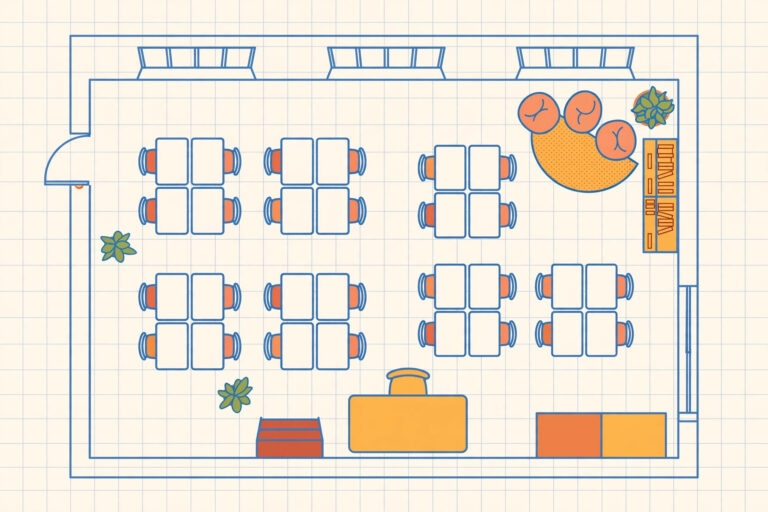
Map these five zones onto your room first — even roughly on paper — and every later decision gets easier. For a methodical approach, sketch a classroom floor plan before moving any furniture.
15 Classroom Layout Ideas
Fifteen field-tested setups, grouped by grade level. Each includes the arrangement and the teaching style it supports. And remember: the right classroom seating arrangements matter as much as the furniture — pair any layout below with a seating plan that fits your students.
For Elementary Classrooms
Young learners need movement, clear sightlines, and cozy corners. These five setups balance structure with flexibility.
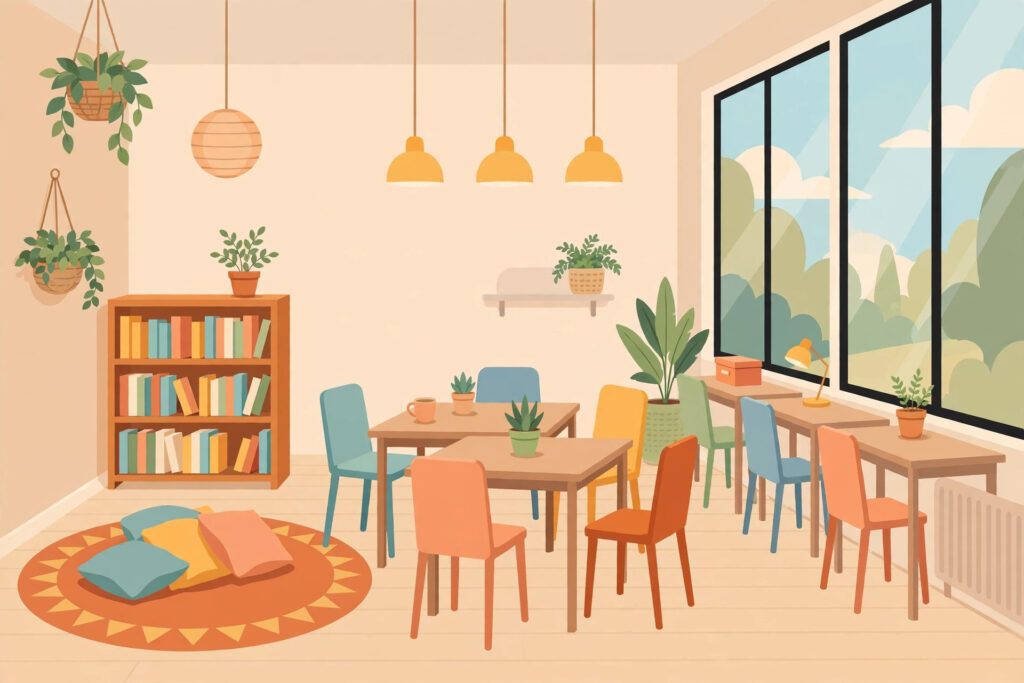
1. The Reading Cove. Dedicate one corner to a rug, a low bookshelf, and soft seating like beanbags. Students rotate through during independent reading. It gives wiggly readers a defined, inviting space.
2. Table Pods of Four. Push desks into pods of four for centers and hands-on activities. Pods make it easy to circulate and check in with every group. Rotate members monthly to build new friendships.
3. The U-Shape for Morning Meeting. Arrange desks in a U so every child sees every other child during meeting and read-alouds. The open middle becomes your teaching stage. Set clear traffic rules for getting in and out.
4. Perimeter Learning Stations. Place three or four stations along the walls and keep the center open for gathering. Students rotate through stations while you pull small groups at a kidney table.
5. The Calm-Down Corner. A small nook with fidgets, a feelings chart, and a sand timer for self-regulation breaks. Teach from day one that it’s a tool, not a punishment.
For Middle School
Middle schoolers crave independence and belonging. These classroom layout ideas give them structured choice without chaos.
6. Paired Rows with Turn-and-Talk. Keep rows of two for direct instruction, then build in regular turn-and-talk moments. Students get the focus of rows plus the energy of partner discussion.
7. The Horseshoe for Discussion. Curve desks into a horseshoe for seminars and debates. Everyone sees everyone, which lifts discussion quality fast. Save it for discussion-heavy days to keep it special.
8. Lab-Style Double Tables. Long tables seating two per side, science-lab style, for hands-on work. Shared materials go in the middle, partners face each other. Ideal for STEM and project-based learning.
9. The Flexible Seating Menu. Offer a daily choice: standard desks, a standing table, floor cushions, or wobble stools. Post the options and let students pick what helps them focus. Set expectations on day one.
10. The Presentation Stage. Leave the front open as a dedicated zone with a projector and stool. Groups present from the same spot every time, building routine and confidence. Keep the rest in a shallow audience arc.
For High School
Teenagers engage when the room treats them like the young adults they’re becoming. These layouts support discussion and independence.
11. The Seminar Circle. Chairs in one large circle — no desks as barriers — for literature circles and current-events talk. Eye contact drives participation in a way rows never will. Best with classes under thirty.
12. Debate Rows. Two facing rows for structured debates. Assign sides, set speaking protocols, and let the format do the heavy lifting. Students prepare more seriously when the room signals that this matters.
13. Workshop Tables. Desks grouped in fours to sixes for extended projects, with shared supply caddies in the center. Build in gallery walks so groups learn from each other’s work.
14. Lecture-to-Breakout Combo. Rows facing front for efficient instruction, with aisles wide enough for instant pair breakouts. Focused input, then immediate processing — a simple “turn to your neighbor” cue keeps it seamless.
15. The Studio Layout. For art, science, or career-tech classes, divide the room into permanent zones: wet area, dry area, storage, critique wall. Students move as their work demands. Label everything in week one.
Small Classroom? Classroom Layout Tricks That Save Space
A small room doesn’t have to feel cramped — it just demands smarter choices. Three principles squeeze more learning out of every square foot.
- Think vertical. Wall-mounted shelves, hanging pocket charts, and stackable bins free up floor space. If it’s on the floor, ask whether it could live on a wall.
- Choose multi-use furniture. Nesting desks, folding tables, and storage ottomans do double duty. Every piece should earn its footprint.
- Protect traffic flow. Map the paths students walk most — door to seats, seats to supplies — and keep those lanes wide. One blocked aisle creates constant disruption.
Walk your room’s main paths yourself before day one. If you sidestep furniture, your classroom layout needs one more edit.
Classroom Layout Mistakes to Avoid
Even experienced teachers fall into these traps. Each comes with a quick fix.
- Never rearranging. A room identical in September and May signals only one kind of learning happens here. Fix: change the arrangement at least once per unit.
- Ignoring traffic flow. Backpacks in aisles and a door squeeze waste minutes daily. Fix: build wide lanes between door, supplies, and seats — enforce them for a week until they’re habit.
- The teacher desk fortress. A massive front-corner desk eats prime space and creates distance. Fix: shrink it, move it aside, or swap it for a mobile podium.
- No defined zones. When every inch serves every purpose, nothing works well. Fix: label a reading corner, a supply station, and a gathering spot.
- Forgetting student voice. Adults design rooms for adult convenience. Fix: ask students what helps them learn — and pair the setup with clear classroom norms they helped create.
Frequently Asked Questions About Classroom Layout
How often should I change my classroom layout?
At least once per quarter, or whenever your focus shifts — say, from a discussion unit to a project unit. Small tweaks like rotating stations can happen anytime.
What is the best classroom layout for elementary students?
Table pods or perimeter stations suit most elementary grades. They support centers, small-group instruction, and movement. Add a reading cove and calm-down corner to cover the rest.
How do I arrange a very small classroom?
Prioritize traffic flow first, go vertical with storage, and pick nesting or folding furniture. Keep one clear instructional zone and make everything else multi-purpose.
Should students have assigned seats?
Assigned seats simplify management and differentiation — most teachers start the year with them, then add choice days once routines are solid. Let the layout support your system.
Does classroom layout really affect learning?
Yes. Research consistently links flexible, well-zoned rooms to stronger engagement and fewer behavior issues — see this roundup of research on flexible learning spaces from Edutopia. The room is the “third teacher.”
Your classroom layout is never truly finished — it’s a living tool you tune as students and curriculum change. Start with the five zones, pick one idea from your grade band, and fix a single traffic lane this week. Small, deliberate changes compound fast. The best classroom layout is the one that disappears into great teaching.