The first week back after winter break can feel like September again: students forget procedures, the energy is unsettled, and the second semester starts whether everyone is ready or not. The good news is that January is also a fresh start. Students expect some change, which makes it the best moment of the year to fix routines that drifted during the fall.
The 10 activities below help you reset expectations, refresh the room and get students learning again, without losing a whole week.
In this guide5 sections
Why a January reset matters
Routines are habits, and habits fade after a two-week break. Rather than reminding students of procedures one by one as problems pop up, it is faster to re-teach them on purpose in the first two days. You can also use the reset to change what did not work in the fall: a seating plan that caused problems, a homework system nobody followed, or a transition that always took too long.
10 activities for the first week back
1. Re-teach key procedures like it’s the first week
Pick the three to five procedures that matter most: entering the room, starting work, handing in assignments, using devices and leaving. For each one, explain it, model it, let students practice it and give feedback. It feels basic, but ten minutes of practice saves hours of reminders later.
2. Revisit the class norms
Put last semester’s norms on the board and ask students to rate each one from 1 to 5: how well did we follow this? Then rewrite, merge or add norms together. Students follow norms they helped shape. Our guide to classroom norms has 30 examples and a step-by-step process for co-creating them.
3. Fresh-start seating
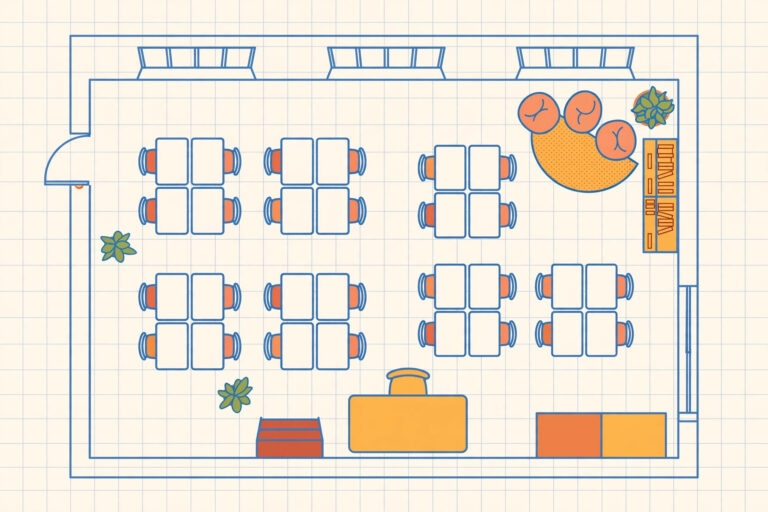
A new seating plan signals a new start and breaks up groups that were not working. Choose a layout that fits how you want to teach this semester: rows for independent work, pods for collaboration or a horseshoe for discussion. See our classroom seating arrangements and layout ideas for options.
4. Goal-setting session
Give students 20 minutes to set one academic goal and one habit goal for the semester, written as if-then plans: “If it’s 4:30 on a school day, then I do 25 minutes of math.” Collect them and return them at midterm for a check-in. Our guide to new year study goals has a ready-made process, including the WOOP method.
5. Brain-dump retrieval warm-up
Ask students to write down everything they remember from the last unit before the break, with no notes, in five minutes. Then they compare with a partner and with their notes. It shows you what survived the break, and recalling it strengthens the memory. Our article on active recall explains why this works.
6. Restart the “Do Now”
If your class has a bell-ringer routine, restart it on day one: a short task on the board that students begin as soon as they sit down. Use a visible countdown such as our classroom timer so the routine has a clear start and end.
7. Procedures scavenger hunt
Make a 10-question quiz about how the class works: Where do you find missed work? What do you do if you finish early? How do you ask for help during independent work? Students answer in pairs, using the room, the syllabus and the class website. It is more engaging than reading the rules aloud.
8. Notebook and folder reset
Give students 15 minutes to clean out folders, archive fall notes, set up a new section and label it. Many students start January with backpacks full of crumpled papers; a short, structured reset helps them feel organized.
9. Class meeting: keep, change, try
Run a short class discussion with three questions on the board: What should we keep from last semester? What should we change? What should we try? Collect answers on sticky notes. You will learn a lot, and students see that their input shapes the class.
10. Practice transitions and attention signals
Choose one attention signal and practice it until the whole class can go from talking to silent in a few seconds. Time it and try to beat the record. Then practice the transitions you use most, such as moving into groups. Our list of classroom commands has short phrases that work.
A simple plan for the first week back
| Day | Focus | Activities |
|---|---|---|
| Day 1 | Reconnect and reset | Short icebreaker, re-teach 3 key procedures, new seats |
| Day 2 | Norms and goals | Revisit norms, goal-setting session |
| Day 3 | Back to learning | Brain-dump warm-up, start the new unit |
| Day 4 | Routines in action | Do Now restart, transitions practice during the lesson |
| Day 5 | Reflect | Class meeting: keep, change, try; procedures quiz |
For a low-key way to reconnect on day one, pick one of our icebreaker games for high school, such as This or That or a question menu. They take five to ten minutes and avoid forced sharing.
Tips for a smooth restart
- Be consistent from the first minute. The expectations you enforce on day one become the norm for the semester.
- Start teaching new content by day three. A reset week should still feel like learning, not a week of rules.
- Explain the why. Teens follow procedures more willingly when they understand the reason behind them.
- Notice what improved. Point out progress in the first week. It builds momentum for the rest of the semester.
- Plan for absences. Some students return late from travel. Keep a one-page summary of new procedures and seating ready for them.
Frequently asked questions
How do I get students back on track after winter break?
Re-teach your key procedures on day one, revisit class norms together, refresh the seating plan and start new content by the third day. Short retrieval tasks help students reconnect with what they learned before the break.
Should I change the seating plan in January?
Often, yes. A new semester is a natural moment to change seats, break up groups that were not working and choose a layout that fits your plans for the next unit.
How long should the January reset take?
Most of it fits into the first two days, with short reminders and practice throughout the first week. Keep learning moving: students settle faster when real lessons start quickly.