Think-pair-share is one of the simplest discussion routines a teacher can use, and also one of the easiest to do badly. Done well, think-pair-share gets every student thinking about a question, testing an idea with a partner, and arriving at whole-class discussion with something to say. Done poorly, it becomes thirty seconds of chatting about the weekend.
The strategy is usually credited to Frank Lyman and colleagues at the University of Maryland in the early 1980s. This guide covers the steps, realistic timing for middle and high school, variations that keep the routine fresh, prompt stems, and fixes for the problems most teachers run into.
In this guide8 sections
The three steps
1. Think (30–90 seconds, silent)
Pose one clear question and give students silent time to think. Ask them to write something: a sentence, a quick sketch, a prediction, or a number. Writing is what makes the think step real; without it, many students simply wait for their partner to talk.
2. Pair (1–3 minutes)
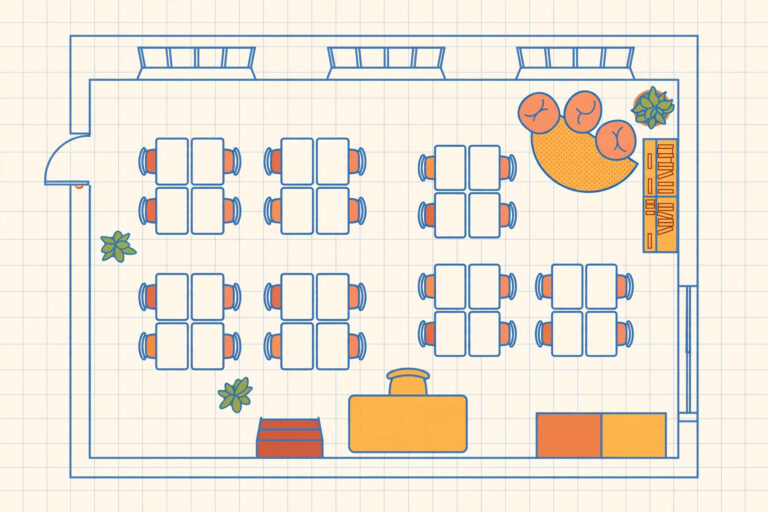
Partners share their ideas. Give a structure: Partner A speaks first for 45 seconds, Partner B responds, then they agree on one idea or one question to bring to the class. Assign partners in advance so no time is lost choosing, and use seating arrangements that put shoulder partners side by side.
3. Share (3–8 minutes)
Call on pairs to share with the class. Ask them to report what their partner said, or what they agreed on. That shifts the spotlight away from any one student and makes listening matter.
Timing guide by question type
| Question type | Think | Pair | Share | Example |
|---|---|---|---|---|
| Quick recall check | 30 sec | 1 min | 2 min | “Name two causes of the Dust Bowl.” |
| Prediction | 45 sec | 1–2 min | 3 min | “What will happen to the balloon in the freezer?” |
| Analysis or opinion | 1–2 min | 2–3 min | 5–8 min | “Was the narrator reliable? Use one quote.” |
| Problem solving | 2 min | 3 min | 5 min | “Find two ways to solve this equation.” |
Eight variations to keep it fresh
- Think-write-pair-share: students write a full answer before talking. Good for quiet classes and English classes.
- Think-pair-square: after pairs talk, two pairs join to compare. Useful when you want more ideas before a whole-class share.
- Timed pair share: each partner gets exactly 60 seconds while the other listens without interrupting.
- Agree-disagree pairs: partners must find one point they agree on and one they disagree on.
- Stand-up pair share: students stand, find a partner across the room, and talk. Adds movement in long blocks.
- Pair-and-revise: after talking, students revise their original written answer in a different color, so you can see thinking change.
- Digital think-pair-share: students post an answer on a shared board, read a partner’s post, and reply.
- Think-pair-share as a warm-up: use it with a question on the board as one of your bell ringer ideas.
Prompt stems that work
Open questions make better pair talk than questions with a single short answer. Try these stems:
- “What do you notice? What do you wonder?”
- “Which answer is wrong, and why?”
- “Explain this to someone who missed class.”
- “What would change if…?”
- “Rank these three from most to least important and justify the top choice.”
- “What question would you ask the author (or scientist, or historical figure)?”
Common problems and fixes
Pairs go off topic
Shorten the pair time and give a clear product: “Agree on one sentence you will share.” Walk the room and listen in. Pairs know they could be called on, so make the share step unpredictable.
One partner does all the talking
Use roles: Partner A speaks first and Partner B paraphrases before adding. Switch roles each time. Build this into your classroom norms early in the year.
Students say “We said the same thing”
Ask a follow-up: “What is one detail you added?” or “What would someone who disagrees say?” Over time, students learn that “same thing” is not an answer.
The share step drags
You don’t need every pair to share. Call on three pairs, then ask the class to show a thumbs-up if their idea was already mentioned.
Using think-pair-share to check understanding
Listening to pairs is quick formative assessment. As you circulate, note which misconceptions appear, then address them during the share. Pair it with other formative assessment examples, or close the lesson with a related question from these exit ticket ideas. Teachers who want more participation routines can also browse these student engagement strategies for high school.
Frequently asked questions
How long should think-pair-share take?
Most rounds take 4 to 10 minutes in total. Keep the think step short but silent, and the pair step just long enough for both partners to speak.
Does think-pair-share work with high school seniors?
Yes. Older students respond well when the question is challenging, such as an ethical dilemma, a data set to interpret, or a quote to analyze. Avoid questions with obvious one-word answers.
What if there is an odd number of students?
Create one group of three. Give the third student a specific role, such as summarizer, who reports what the other two said.
How often should I use think-pair-share?
Once or twice per lesson is common. Using it at key moments, such as before a new concept or after a demonstration, works better than using it after every question.
Final thoughts
Think-pair-share works when each step has a purpose: silent writing for thinking, structured talk for pairing, and accountable reporting for sharing. Start with short rounds and clear questions, practice the routine until it feels automatic, and it will become one of the most reliable tools in your daily lessons.